A response to The Creeping Orthodoxy of the Neurodiversity Movement by Bill Williams TW: medicalised language https://quillette.com/2021/09/03/creeping-neurodiversity-orthodoxy/
When I first started reading the article released on the 1st of this month (November2021), “the Creeping Orthodoxy of the Neurodiversity Movement” by Mr Bill Wiliams (online), my heart fell at the first sentence and his usage of the word “disorder” and the “d” attached to AS (Autism Spectrum). Anyone who understands the word Neurodiversity, let alone the “social movement”, would not be using such negative deficient medical model wording. We are trying so hard to educate others about precisely this usage of deficient-based wording. Yet, we are not even ten words in, and the exact opposite of what we call for is being used. What is worse? It is used in an opinion piece to critique the very idea of what is Neurodiversity and being Neurodivergent. I am amazed that Mr Williams claims to have favoured the Neurodiversity movement and even included himself in it. It certainly is not apparent in the language he used.
“At a glance, the neurodiversity movement operates as an extension of the organizing principle that animated previous struggles for civil rights and acceptance. Like members of other minorities and marginalized groups, individuals with mental health issues and the developmentally disabled were subject to discrimination and persecution. There was a time when institutionalizing a difficult child was considered humane, and cold mothers were cruelly blamed for ASDs.”
https://quillette.com/2021/09/03/creeping-neurodiversity-orthodoxy/
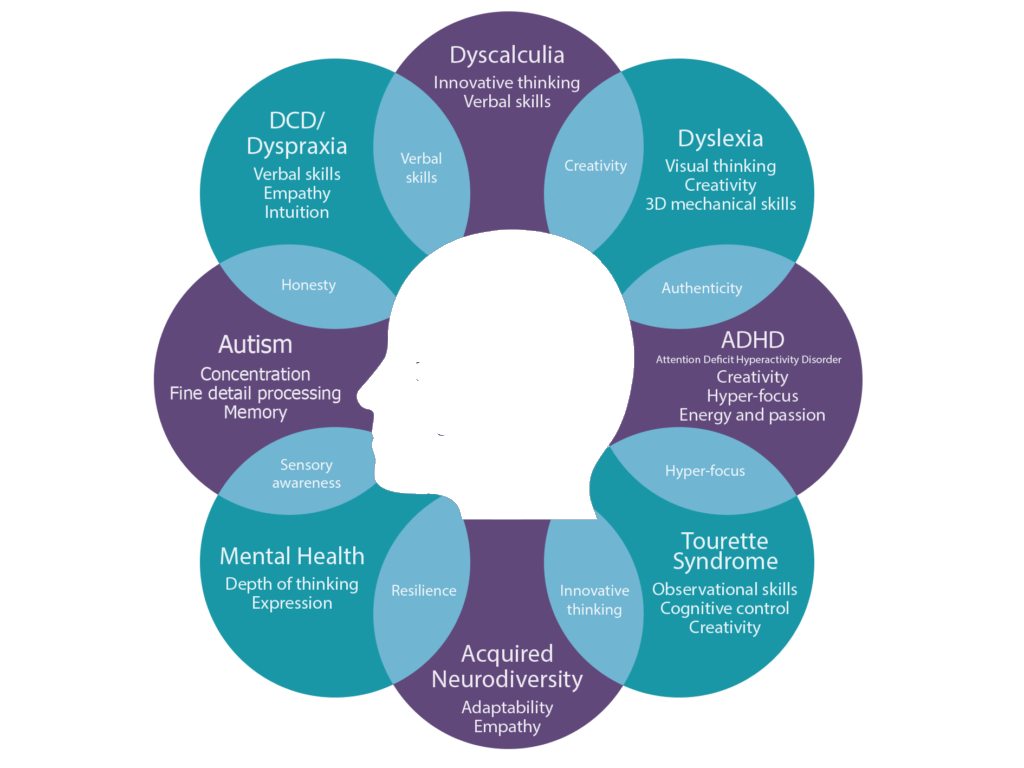
The actual coining of the term Neurodiversity was by Judy Singer in the ’90s. It was a cultural shift taken on by many. Because, for the first time, Autistic people with different brains were talked about in a non deficit-based way. They were no longer referred to as “needing to be fixed” but instead just thought, perceived and felt different to those not Autistic or Neurotypical. After decades, the idea that Autistic People were a part of this group as well as those ADHD, and dyslexia called Neurodivergent and suddenly they are not deficient.
The Neurodiversity movement does operate as an extension. We actually are the marginalised group with Autistic people at every intersectionality, disabled to abled, from poor to wealthy, Black and Brown to white, straight to LGBTQAI+. Society doesn’t speak enough about how being Autistic is far from solely a white, wealthy cis male experience. It does aim to –
“remove social and enviromental obstacles which prevent the flourishing of autistic individuals while opposing the medical and behavioural interventions seen as making the autistic person “indistinguishable from his peers”
https://quillette.com/2021/09/03/creeping-neurodiversity-orthodoxy/
How is respecting the Autistic mind as different and not in need on neurotypical normalising compliance-based “therapies” and “Social Skills” wrong? It is so plain and simple. Thankfully, Mr Williams does not imply differently.
Mr Williams highlights the accomplishments of some Autistic individuals, mainly from the states and even mentions ASAN and Steve Silberman’s incredible and influential book Neurotribes. He mentions Autistic actors, journalists, politicians, etc., glossing over the fact that more and more Autistic people are becoming known because they no longer fear disclosing their diagnosis. Why could that be? Couldn’t it be because of the Neurodiversity movement? Could it also be the continual explaining and education by Autistic people on their autistic experience? Strength very much can lie in numbers.
In the article, Mr Williams also discusses how many ND (neurodivergent) advocates are “suspicious” of research in Autism and Autistic people. Thankfully the reasons he gives for the suspicion are correct. We are tired of the pathologising of our experience and of the terminology. Absolutely we are. Who wouldn’t be? It is the main reason why so many autistic people are saying the same thing when it comes to Identity first language and the hated puzzle piece logo used. Demanding that Autistic children have (NT) neurotypically devised and delivered, long and intensive, compliance-based, and abusive therapies that only lead to further trauma, abuse and even the chance of grooming needs to stop. From the concept onwards, demanding that research should not be about us without us as well as it should be a factual practice by anyone researching Autism and Autistic people.
These are not far fetched “demands”. It’s Hunan Rights .
“Nothing About Us without Us”
Charlton, James I (1998). Nothing About Us Without Us. University of California Press. ISBN 0-520-22481-7. Retrieved 2010-06-22.
But then, the article, which again started with the pathologising language, dives much much deeper. Autistic Dark Web (ADW) deep. For those of you not on Twitter or even who haven’t come across the hashtag autistic Dark Web, you have been spared up to this point. Sadly if you read on, that ends now.
By now, most of you know what The dark web is or at least what it refers to. In basic terms, it utilises a tor to navigate websites that are pretty much like walking into a black market. Anything and everything from illegal films to much much more are obtainable, and it really can be a rather scary place without going into details.
So what is the Autistic Dark Web? The Neuroclastic team explain it really well here-
“The anti-neurodiversity movement, many of whose members have been called the “Autistic Dark Web,” a troupe of people who are mostly regarded as trolls and are most visible on Twitter. These people claim that the #ActuallyAutistic/Neurodiversity Movement is full of “social justice warriors” from the far left who want to turn autism into an issue of “identity politics.”
https://neuroclastic.com/behind-the-anti-neurodiversity-articles-an-unholy-alliance-of-usual-suspects/
I’m not even sure where the term originated from exactly, but it was meant satirically. However, it was seriously claimed by some. It then became a hashtag to avoid because of the ableist and medicalised language, not to mention the constant attacks on those supporting and tweeting about Neurodiversity.
So, why have I mentioned this? Because who does Mr Williams first speak about in his stance that the ND movement has gone “too far”? Tom Clements, one of the most prolific writers that have claimed the ADW and is blatantly anti- Neurodiversity. I draw your attention to the Neuroclastic article linked below that the quote above was taken from. There is so much more honestly, including very offensive tweets, that I will not go into here. The second autistic person mentioned is also a very problematic “member” of the ADW. If you want to read more, another Neuroclastic article is at the end. So, when Mr Williams mentions the fact that both ADW members received negative feedback on their horribly backwards-looking articles, why does it seem as if he is shocked by this? Implying that those promoting precisely what the ND movement is against received any negative feedback somehow validates his opinion that the ND movement has gone “too far” just does not make sense.
We are “militant” to Mr Williams when we express why we consider Autism Speaks a hate group and those who call themselves “autism moms” and back Autism Speaks as dangerous. Because it is dangerous. Autism Speaks and all those organisations and so-called charities that are not Autistic led. They have no senior roles filled by Autistic people and they are trying to speak about us without us. They reach out to vulnerable parents, confused and not knowing where to turn to learn about their children, Instead of involving Autistic adults and parents, many of which are willing to educate others about the Autistic experience. They target Neurotypical parents and carers and offer them a deficit-based view of what it means to be Autistic. They promote the idea that we need to be fixed somehow or trained to be more neurotypical all the while the money flows.
They are shaping national policies and the narrative about Autistic people and Autism, and we haven’t even been invited to the discussion table. It is far worse in the United States, where I am originally from, though it is worsening here in the UK with mandates of ABA and PBS insidiously invading all of the education, health and social care. Insurance mandates in areas including Whole States (Texas) of America and local authorities here in the UK insist on early intervention of behaviour based “therapy” at the cost of the autonomy of every single diagnosed Autistic child or young person in that state or area. The fact that a parent could even be considered unfit and have their child removed because they refused to put their Autistic child through an abhorrent abusive therapy is unthinkable to most autistic people, especially Autistic parents. However, even in 2021, it can and does happen.
The next item up for massive criticism from Mr Williams is that horrible play in London with the puppet from 2019, “All in a Row”. Well, the least said about the idea that a puppet would be a great idea to portray an Autistic non-mouth speaking 11 year old, the better. An autistic child was portrayed as a puppet on the stage with human actors. This character was THE ONLY PUPPET. So when we learnt that they consulted with a mother of an autistic child, many Autistic Neurodiversity supporters sadly were not surprised. Once again, Autistic people were not invited to the discussion table. That isn’t even going into the narrative that having a puppet portray an Autistic child perpetrates. That being Autistic is tragic and destroys families. Again, I fail to see how reacting with outrage to this play, with its negative narrative, shows the Newurodiversity movement as being “militant”.
Was it militant for black people to say enough is enough with the horribly negative stereotypes portrayals they had to put up with in the past all over the media, not to mention in society itself? What about those unethical and racist experiments? How about those LGBTQAI+?
I must admit it was when Mr Williams mentioned Damina Milton, an ex lecturer of mine and a friend, and his theory called the Double Empathy Problem that I actually became angry. It wasn’t that he mentions Damian’s theory but that he dismisses it as “unrealistic”. However, this is where his opinion falters. He seems to fail to see that in that umbrella of Neurodiversity is quite a bit of other diagnoses as well. He never seems to mention those who are ADHD, Dyslexic, etc., mentioning mainly Autism only. His statistics for why the Double empathy Problem will not work are autism statistics only, yet his opinion is based on the Neurodiversity movement as a whole.
In any case, when considering the Autistic community alone, and the Double Empathy Problem, we have several articles mentioning the research now- see here and here and here ( here is a easier read version) as well as Rachel Cullen’s work which looks deeper – Autistic Pragmatic Language Hypothesis. HERE
This idea that the Double Empathy Problem is unrealistic is negative, but I would suggest untrue based on history. It was only in the late ’90s that any understanding of ADHD and even Autistic people came to be. The idea of the Autistic experience was vastly different to what it is today, and it seems society is gradually learning that. Is it so far fetched to think that society can grasp the idea of Autistic experience and Neurodiversity? I don’t think so. In fact, I would go as far as to say that because there are a few so opposed to the idea, we must be doing well to get the idea out there.
It also doesn’t surprise me that Mr Williams brought out the same thing Autistic advocates of Neurodiversity constantly hear as a case against it. The idea that how can we “speak” about Neurodiversity for “all autistic people”. Quoting:
“ If you have met one person on the spectrum, you’ve met one person on the spectrum”
https://quillette.com/2021/09/03/creeping-neurodiversity-orthodoxy/
That is true. When you have met one Autistic person, you have met one Autistic person. The only problem I have with that statement is the person’s first language rather than identity-first language. However, Mr Williams uses this to explain why the Double Empathy Problem would not work and divides the community in his critique. Mr Williams is missing something vital. While being stuck in his medicalised view of Autism and focused on deficits, he is missing the shared culture we have. By the pure fact that we are “diagnosed”, Autistic means we share commonalities. Therefore, it actually doesn’t matter “where you are on the Spectrum” using his type of speech. We all share the fact that we have neurodivergent brains. Mr Williams, not seeing the benefits of what he even acknowledges, Autistic people feel more comfortable with each other, claiming it isn’t enough of a reason to “level the playing field in terms of empathy”. Why?
Mr Williams implies that letting “autistics speak for themselves” assumes that we will want all autistic people to say the same thing, which is simply not true. That is precisely the opposite. We want all voices to be heard and believe firmly that they are all valuable. Like those members of the ADW, he is accusing Autistic people of not considering the voices of those non-mouth speaker autistic people and those with LD. What is worse, Mr Williams is not considering the many “more severe” ( ADW use functioning labels with pride) who actually are voicing their opinions online under the idea of Neurodiversity. Therefore accusing Autistic advocates of the very thing, he may well be doing.
We are accused of accepting only the “popular” autistic people and not including “those who can’t contribute to society”. At no point do the accused consider that we are calling for acceptance and understanding of Neurodivergent people to change the alarming fact that many of us are unemployed? The fact that even disclosing being diagnosed as autistic could cost your job. That we can and are productive and can contribute. In fact that throughout history, Autistic people made terrific contributions. That having the proper support in work and education is a human right. We are calling for society to change so that the environment around us is less toxic, dangerous, and continually challenging. That what we are asking for isn’t difficult and instead a shift in perception and understanding. That actually including us will enrich society as a whole.
We are also accused of saying that we are not disabled being Autistic. Again, this is so untrue. I personally do not believe disability is a bad word in any way. I am disabled by society. I am a minority in a neurotypical normative world. I also have Ehlers Danlos syndrome. Society disables me because It impedes me mobility wise with various barriers all over. Society disables me as an Autistic person by not understanding and accepting my neurotype and not understanding that I am not broken and need to be fixed because I am Autistic.
Lastly, we have inspiration porn. This idea that neurotypicals have of the football player taking the Autistic girl to the dance is so “inspirational” is nauseating. Being praised for doing anything just because you are Autistic is ableist and highlights how misunderstood autistic people are. This has nothing to do with Neurodiversity in any way. So again, we have a critique that makes no sense. If you take the word Autistic out and put it in any other marginalised community, it would be automatically unaccepted and condemned. Still, if it is an autistic person, suddenly it is ok.
Mr Williams ends his opinion piece stating that he “supports” the Neurodiversity movement in terms of the “civil rights movement”. However, sadly I would say that he never understood it, to begin with
references:
Singer, J. (2016) NeuroDiversity: the birth of an idea. Available Kindle Online.
Charlton, James I (1998). Nothing About Us Without Us. University of California Press. ISBN 0-520-22481-7. Retrieved 2010-06-22.
https://www.tandfonline.com/doi/abs/10.1080/09687599.2012.710008


 Bobbi Elman: NeuroDivergent Autistic Experience Consultancy & Training™